
Bring Your Fashion Ideas to Life — One Figure at a Time
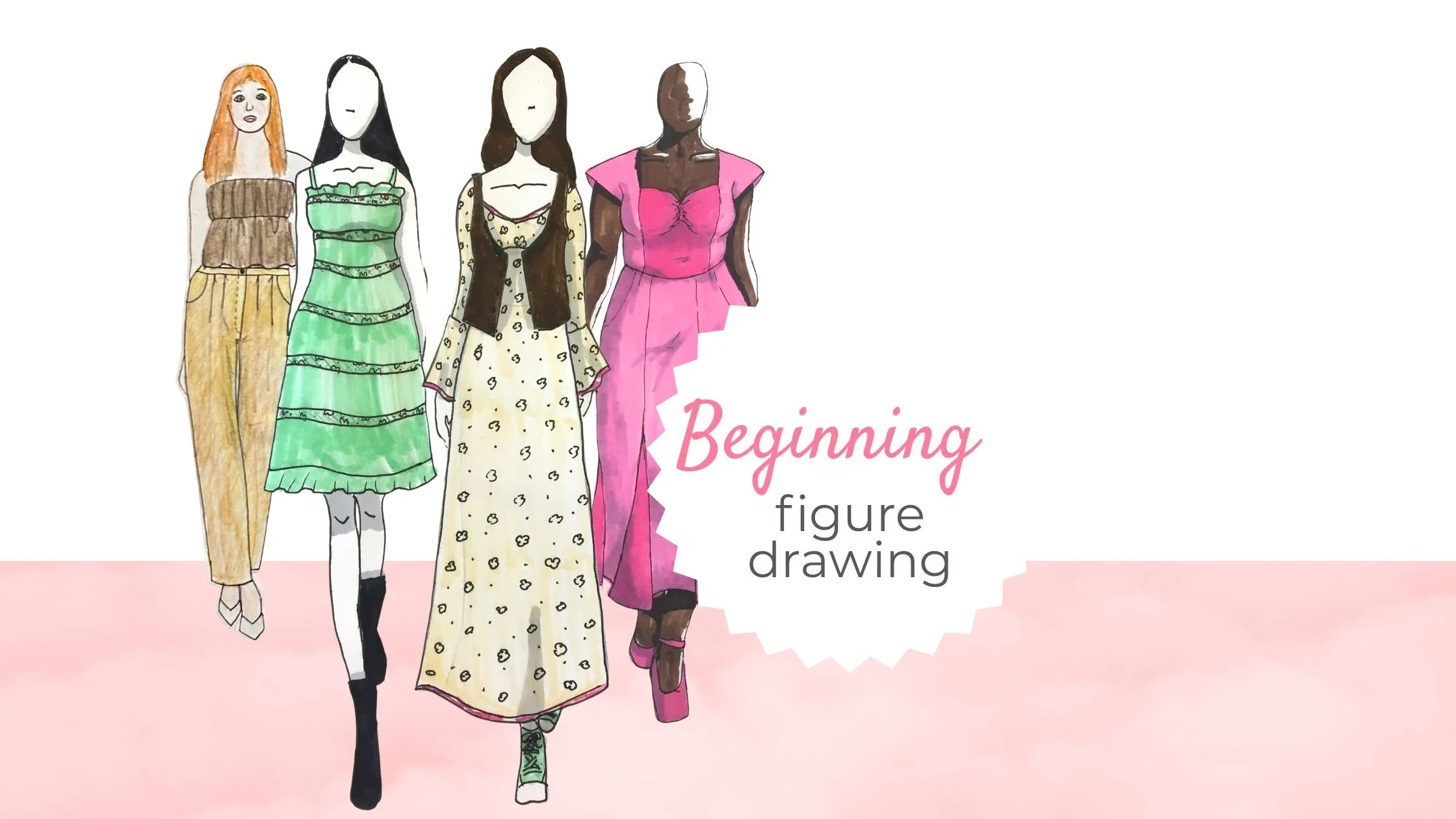
If you’ve ever had a fashion idea in your head but struggled to get it onto paper, you’re not alone. That’s exactly where our Beginning Figure Drawing class comes in. Led by the talented Julie Ann Brown, this course is all about giving you the tools to bring your vision to life—starting with a walking figure that you can dress, style, and make entirely your own. We sat down with Julie Ann to talk about her approach, what students can expect, and why learning to draw the human form can transform the way you design.
1.For someone completely new to drawing, what makes figure drawing such an important first step in fashion design?
Clothes are worn by bodies, so learning how to draw these bodies in the correct proportion will give students a strong foundation of seeing this visual relationship directly. Developing a walking figure template will also give students the opportunity to explore fabric movement in their design sketches later.
2.Your class focuses on breaking the figure down into simple shapes and landmarks—can you explain how this approach helps beginners gain confidence?
I have learned from past students that drawing a body seems really complex and intimidating, especially if they have only drawn 'stick figures' in the past. That is why I developed an easy system of drawing bodies through simple shapes: cups, vases, and ovals. Then we move onto learning vertical landmarks, like the elbow usually bends near the waist and the wrist lands near the widest part of the hips, etc. Once students start applying these new concepts to the page, they jump into drawing other fashion poses with ease, without all of that angst they had before. Practice builds confidence!
3.You encourage students to draw any gender or body type they choose. How does this freedom influence creativity and personal style in their designs?
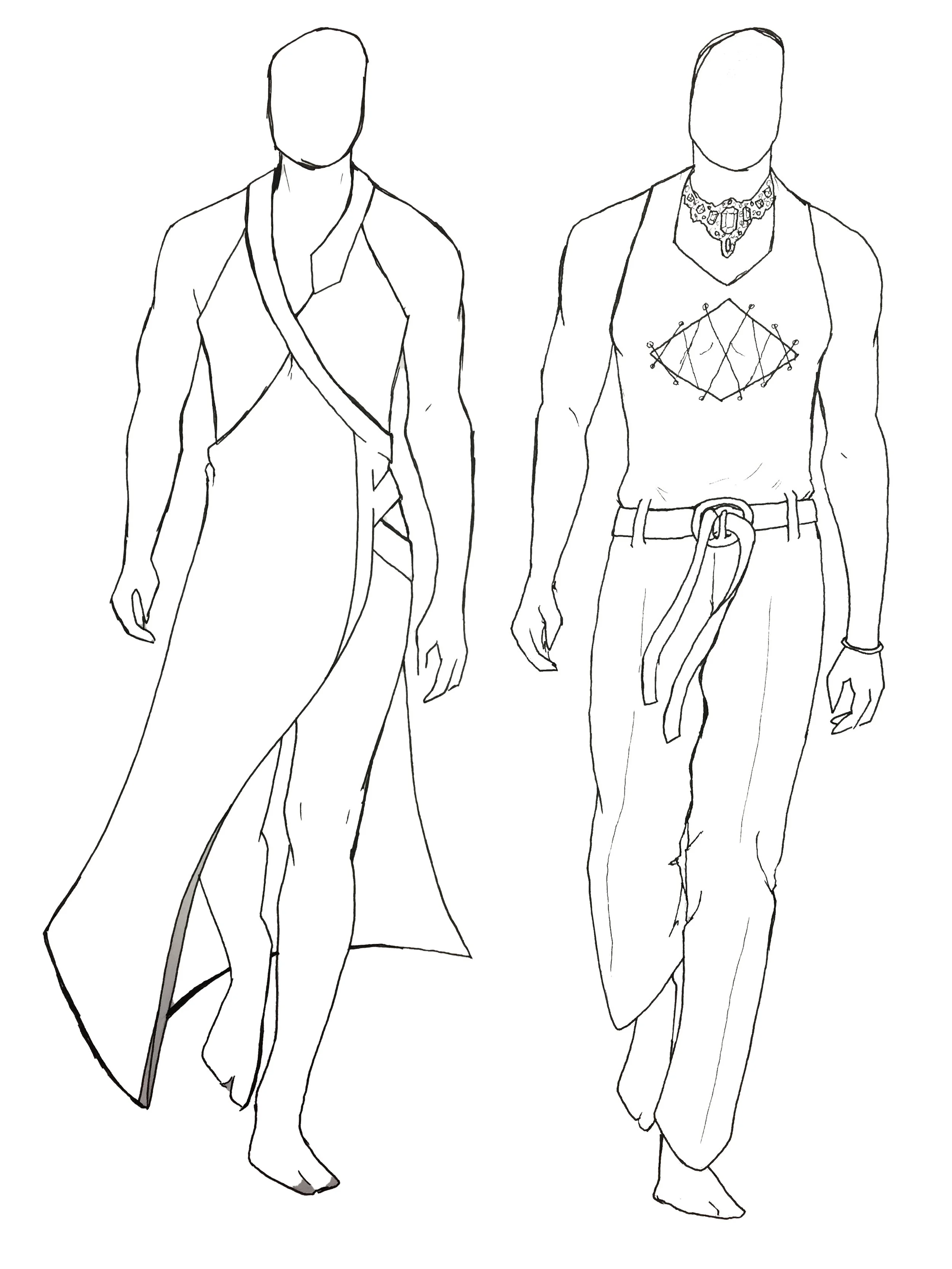
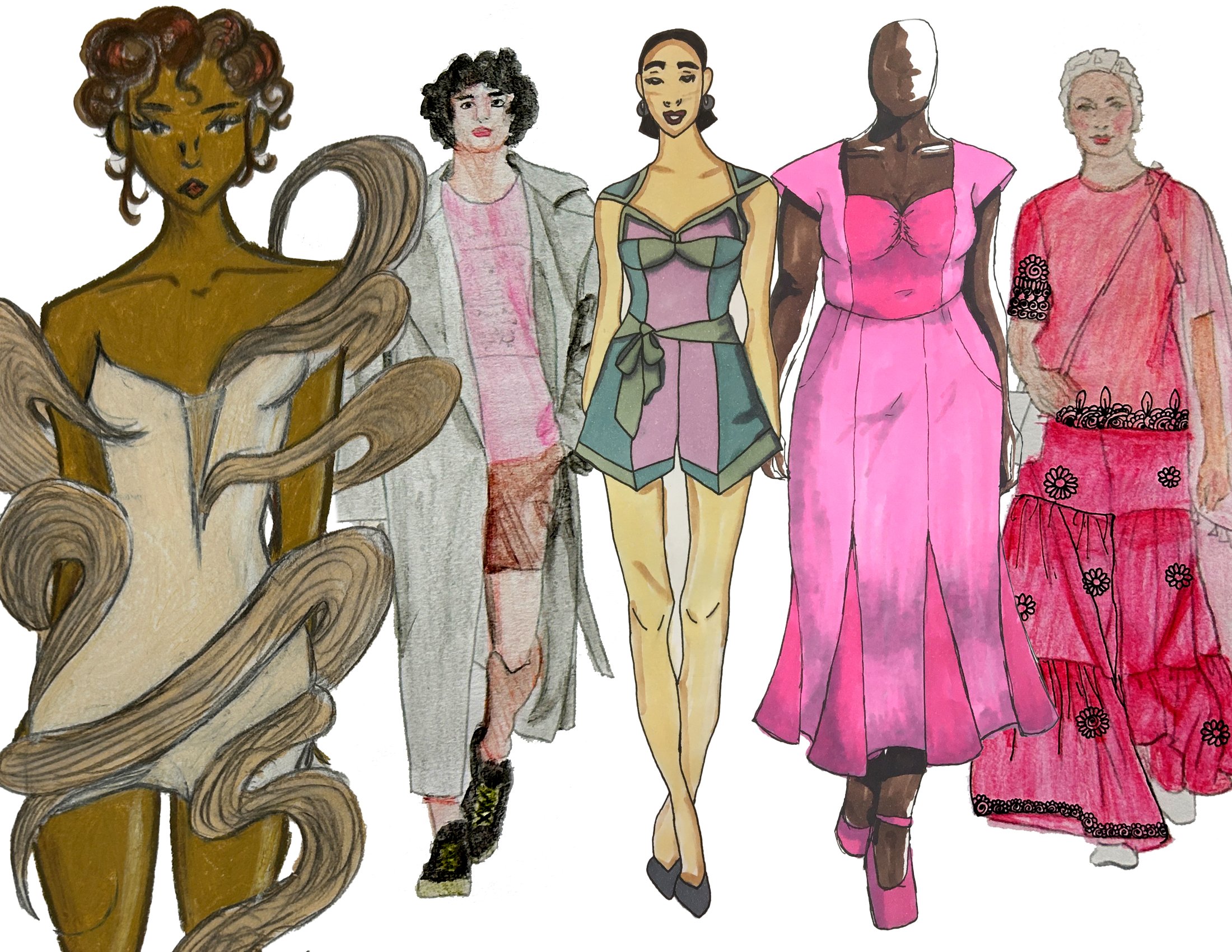
If we are designing for humans, it's thoughtful to represent the endless varieties of shapes, colors and genders that are around us every day. Giving students 'permission' to choose who they want to represent can feel very empowering, especially if it's a moment of 'these clothes are for me and people who look like me.' Once they see that figure sketched on a page, they will have carved out a tangible space for their style to find immediate expression. A while back I had a student influenced by aliens and they sketched their figures with huge heads and eyes. Who am I to squash that idea? They could be out there.
4.What’s one “aha!” moment you often see students have when they start sketching on a proportioned figure for the first time?
I have had many students draw clothing pieces like tops and pants just floating in air in their sketchbook in the beginning. When they draw these same pieces as an entire outfit on the figure later, they are surprised to find that they had to add length to both pieces.
5.How does learning to draw the figure improve the way students can design and communicate their fashion ideas?
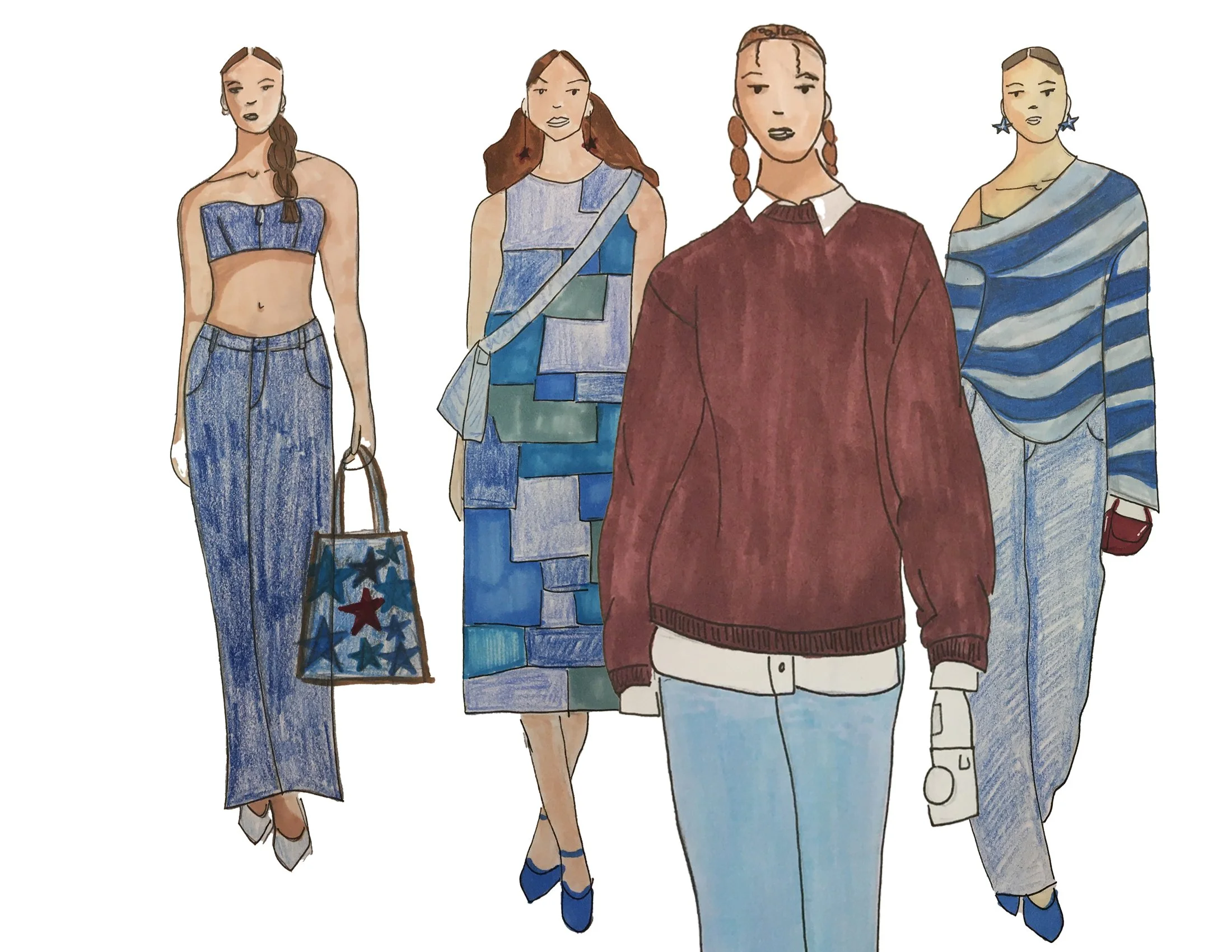
Drawing on a figure makes the student think about fit right away. They have to decide if their clothing design is to be worn skin tight or loose and baggy. This becomes even more important when a fabric is chosen for a sketch because they will have to determine if it will look boxy and square, or long and drapey as it falls to the floor. When students start developing sportswear collections with many pieces and layers, then the relationship of individual hemlines becomes really important. In the 90s when low rise jeans became really popular, designers either chose to make t-shirts a lot longer to cover the stomach or they decided how cropped their shirts were by how much belly was showing on their figure's body.
This class ends with tips and tricks for drawing clothes on the figure—what’s one of your favorite “insider” tips you’ll be sharing?
Gravity always affects the way your fabrics hang on the body.
7.What types of fashion designs or styles do students often feel inspired to create once they’ve mastered their walking figure?
I most often see short shorts or long, flowy skirts!
8.What’s the atmosphere like in your classroom? Should students expect a structured lesson, relaxed creativity, or a mix of both?
I would describe my classes as structured for the first half of the lesson, as I demonstrate each concept while the students draw along with me. I often give students handouts to use in their practice time. In the second half, the students sketch at their own pace as they continue the exercises, finish the class sketch, or start on their homework. I usually walk around at this point being nosy and offering guidance, before I eventually lead the conversation to fur babies.
9.If a student leaves your Beginning Figure Drawing class with only one takeaway, what do you hope it will be?
There is no such thing as perfect. Make an enemy of envy and keep yourself on the creative path. You are a work in progress, and so am I.
Beginning Figure Drawing- Ages 13-Adult
Weekly on Wednesdays from Wed, Nov 5 to Wed, Nov 19
Learning to sketch your ideas on a figure is the starting point for creating your own fashion ideas. This course will teach you how to draw your own walking figure using simple shapes and landmarks to get the proportions you want. Students are welcome to sketch any gender or body type they choose. The course finishes with tips and tricks for drawing clothes on their new figure.
This class meets once a week for 2 hours for 3 weeks.
Instructor Julie Ann Brown