
Fabric Construction 101 - Woven vs. Knit
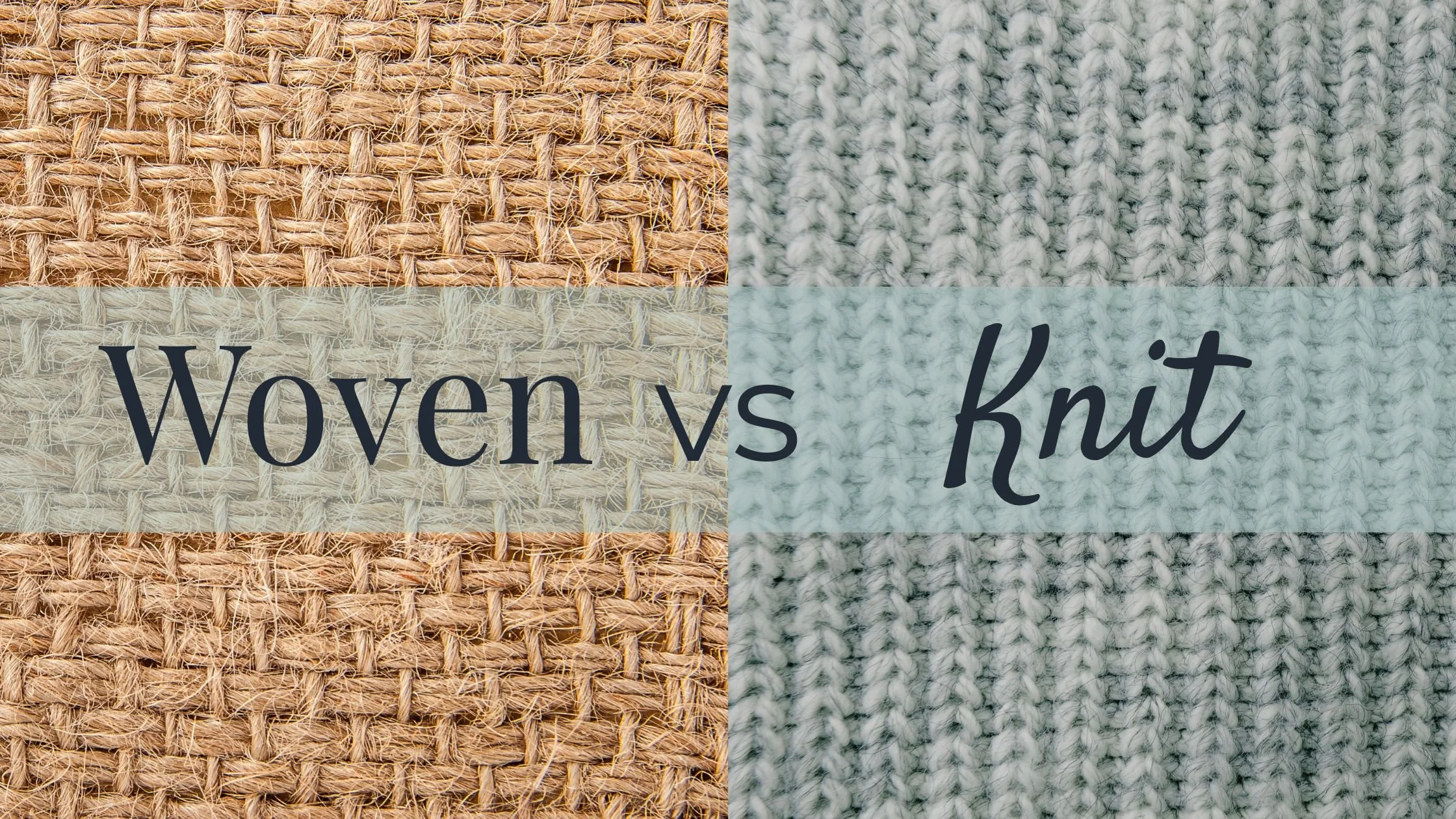
One of the things that came up a lot this summer was the difference between woven & knit fabrics. It's not something one thinks about very much unless they are learning to sew and have to choose the correct fabric for their pattern or for the type of clothing they are trying to make. Let's break it down a little to help you understand the structure of each of these types of fabrics so that you can understand how to choose them more effectively.
Woven Fabrics
Woven fabric is created with a loom that has threads running vertically along the length of the fabric (warp threads) and a thread that passes through those threads in a certain pattern, horizontally (weft threads). As each pass is made with a shuttle (holding the weft thread) the thread will be woven under opposing threads. Depending on the pattern the weaver uses, it will give the fabric a certain kind of look. That is considered the "Weave". Some weaves you might have heard of are Denim, broadcloth, plain weave etc. We can get into those later. One thing you should understand is that woven fabric usually doesn't have much stretch. The construction is very stable. The exception, would be if an elastic was added to the fiber content that might give some stretch. But overall, woven fabrics, are less stretchy than knit fabrics.
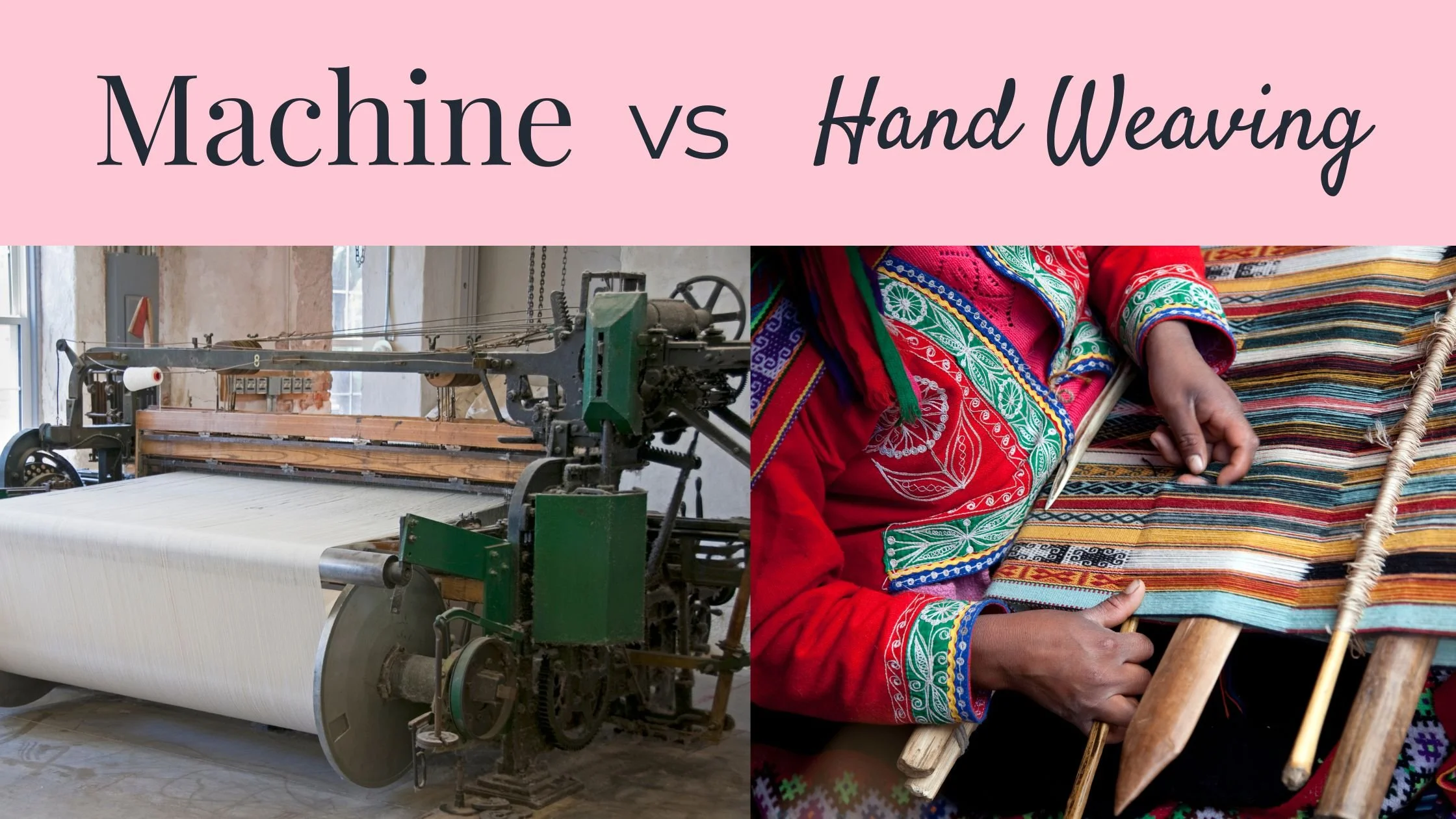
There are different kind of looms used to weave different kinds of fabrics. Most looms are either an industrial loom, designed to be used in a factory with minimal labor or a hand loom, which requires a weaver to move all it's parts to create the fabric. Look at the photo below to see the difference. There is another kind of loom called a Jacquard loom that uses a series of punch cards within the loom to create a design in the fabric. That kind of loom deserves it’s own blog post, so I’ll leave it at that.
Some common uses for WOVEN fabrics :
Trousers
Suits
Structured dresses, gowns and skirts
Men’s shirts / Women’s blouses
Table Linens
Knit Fabrics
Knit fabric is an altogether different type of fabric. Generally speaking knitted fabric is more stretchy than woven fabric and often has quite a different drape. In the photo at the top of the blog, you can see woven fabric on the left and knitted fabric on the right. It is made using a series of loops that intertwine, giving its structure more flexibility than weaving with a loom. Depending on the size of the yarn used and the size of the needles, different fabric structures are created, giving one almost endless possibilities. As with weaving there are different kinds of devices used to make knit fabric and it can be made with a machine or by hand with a set of knitting needles.
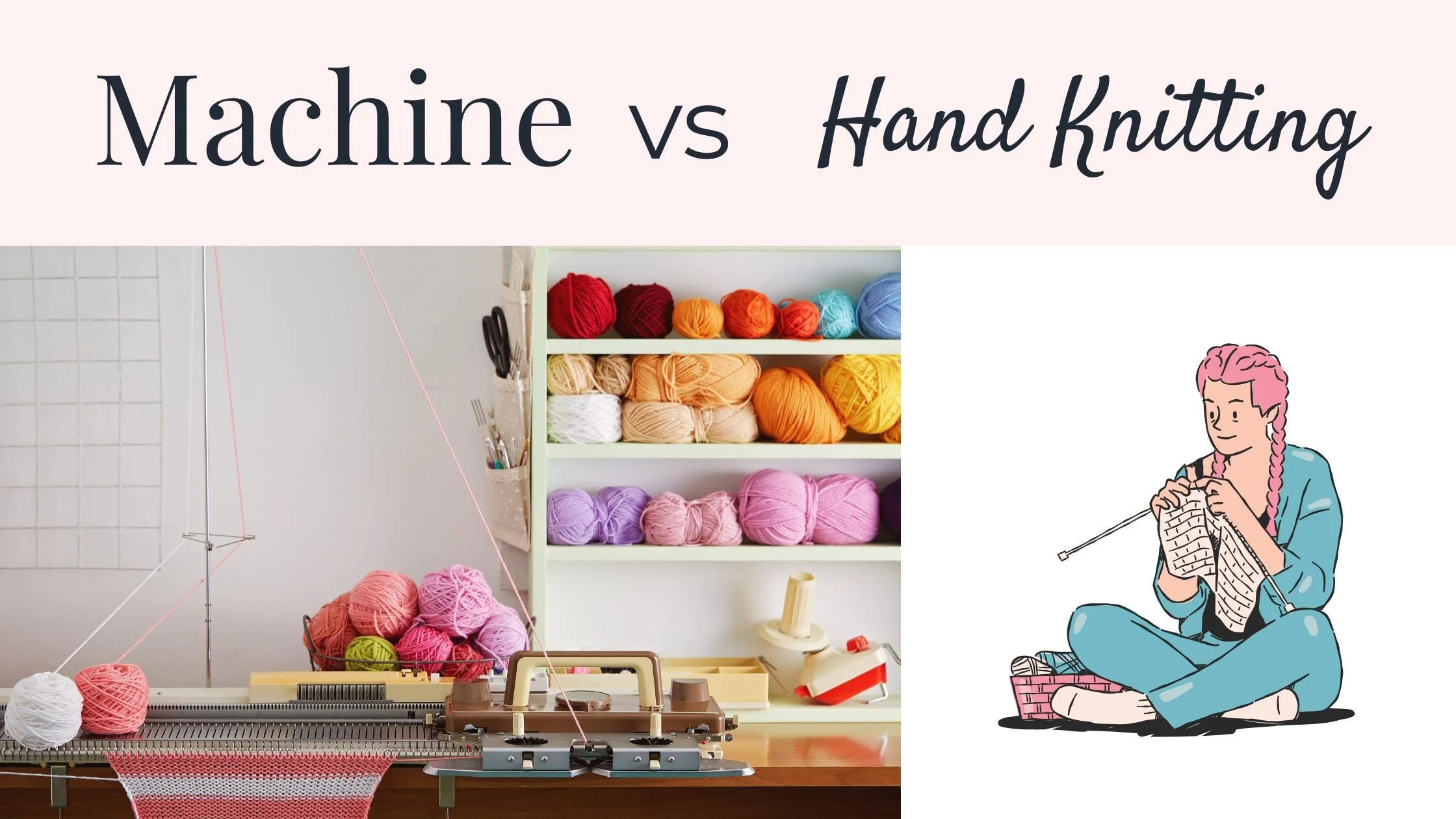
I love knitting by hand. It’s very relaxing and something one can do over a long period of time (all my own opinion). I use two needles and follow knitting patterns. This kind of knitting is done with yarn and creates a bulkier type of fabric. With hand knitting, there is often much less sewing involved and you are making fabric and a garment or item simultaneously.
Machine knitted fabric on the other hand is often a finer gauge of fabric and can be used to create either pieces of a garment (on a small knitting machine) or knitted fabric that can be cut and sewn into garments. The knitting machine can be a relatively small machine operated by one person, which makes for faster knitting than with only two knitting needles, as it has multiple needles along the machine and the operator can arrange the yarn and needles. Industrial knitting machines are very very large versions of the small machine and are how knit fabric is made in a mill/factory.
Some common uses for KNIT fabrics:
Activewear
Swimwear
Underwear
Sweaters/jumpers/hoodies
T-shirts
I hope this helps you understand the structure of knit & woven fabrics a bit more clearly. Until next time,
Happy Sewing!
xo Jennifer