
How to Create Your Own Designs from Sketch to Garment for beginners
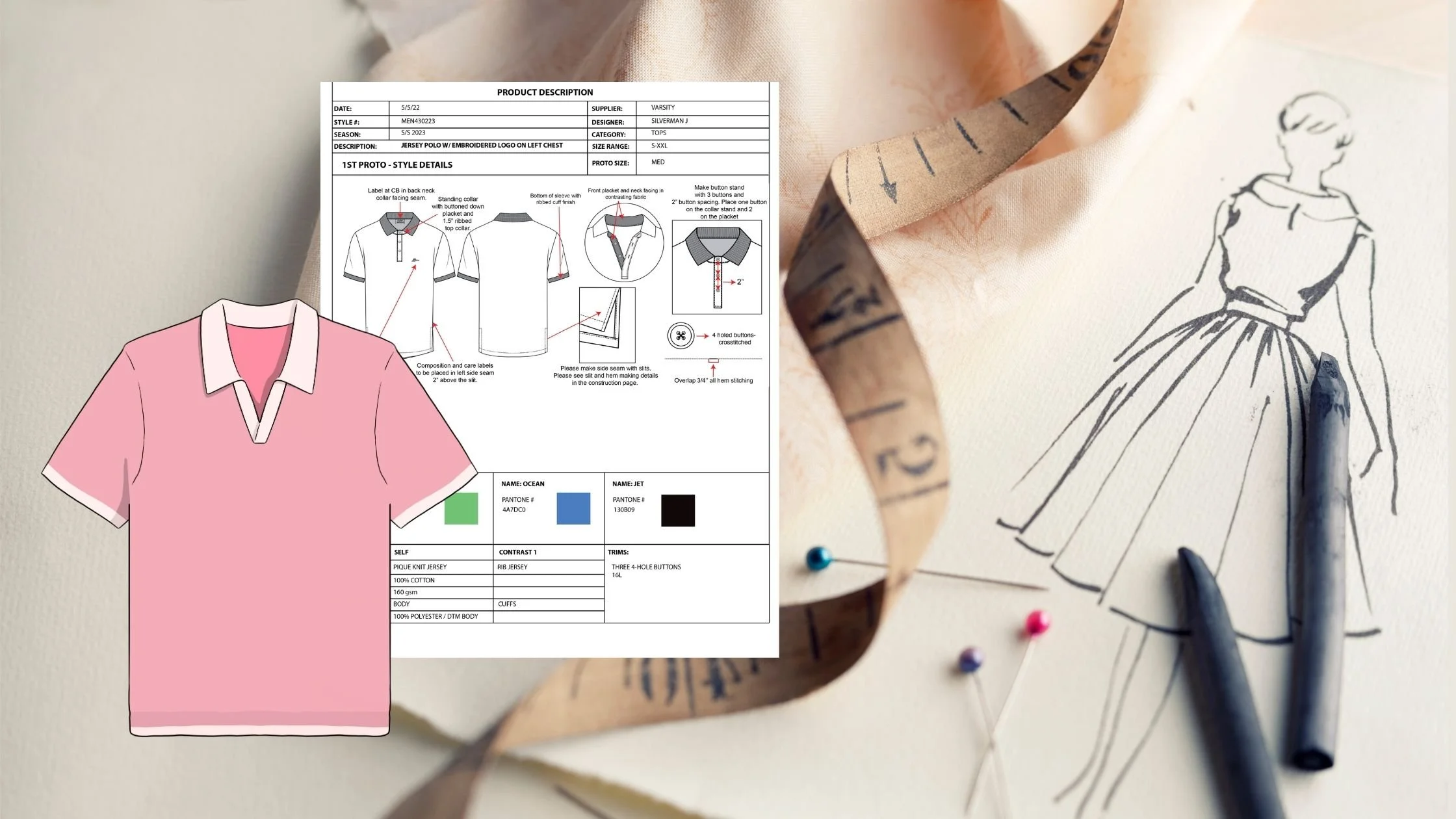
Over the last few years of working with beginning design students we found that most want to understand how to actualize their own designs from start to finish. This is the goal right? How do we get from step A to step Z? This can be a daunting process for someone to little or no sewing experience. Let me try and break down the process in simple steps to help you understand how it happens as well as give you some shortcuts that will help expedite the process. I’ll list the steps below and categorize them into 3 parts. Here we go:
Part 1: Developing your Design
A) Decide on Your Design Style- The designer needs to be aware of the silhouette they want to create as well as the style lines and seams used to build the shape of the garment. A seasoned designer who has gone to school for fashion, will understand the garment construction process, standardized names for different styles and what kind of fabrics might work best with the style you are creating. A beginning designer may not have these skills honed as clearly. Here are some things you can do to to develop these skills:
Go Shopping (yay! this the fun part right?) - This could be through magazines or online, but I recommend going into stores (or your closet) to study actual garments.
Study garments that are similar to the design you want to create. You’ll want to look at the seams, construction, overall shape and different parts of the garments as well as the fabrics they used.
Take detailed notes about what you like and what you don’t like.
Choose a simple style to begin with. If you are a new sewer a garment with fewer seams is best
B) Sketch of your design - Developing a working sketch is a crucial part of the process because it will inform how the pattern is made and how the garment is put together. A flat sketch is a great place to start, because you can draw in all the important style lines and seam lines that you decided on for your design. You might want to even note some measurements, topstitching details and pay careful attention to proportion. Here are some tips for creating flat design sketches:
Use a template or a croquis to get the proportions correct. There are lots of these available online
Practice sketching - seems silly to mention but practice is important in any skill you are trying to learn.
Flat sketches are just a series of straight and curved lines. Practice looking for the shapes you see when you are sketching. Really looking at an object and the shapes within will help you in your sketching.
C) Decide on Fabric - Fabric can make or break a design and choosing the right fabric for your garment is important. Time and experience will help you understand how different fabrics behave, but in the beginning, here are a few ways you can learn to start choosing fabrics for your designs.
Study actual garments in the store. (are you sensing a theme) and ask the sales people about the fabric. I recommend going to a higher end store where the sales staff might be more experienced. They will understand what the garments are made of and may even be able to tell you about qualities the fabric possesses.
Learn the differences between knit and woven fabrics.
Go to fabric stores and ask the sales staff about the fabrics. You’ll want to ask about different fibers vs. weaves or knits
Buy a book on textiles or check one out from the library. It’s important to understand your fabric
Start a fabric swatch library for your reference.
Part 2 - Developing your Pattern
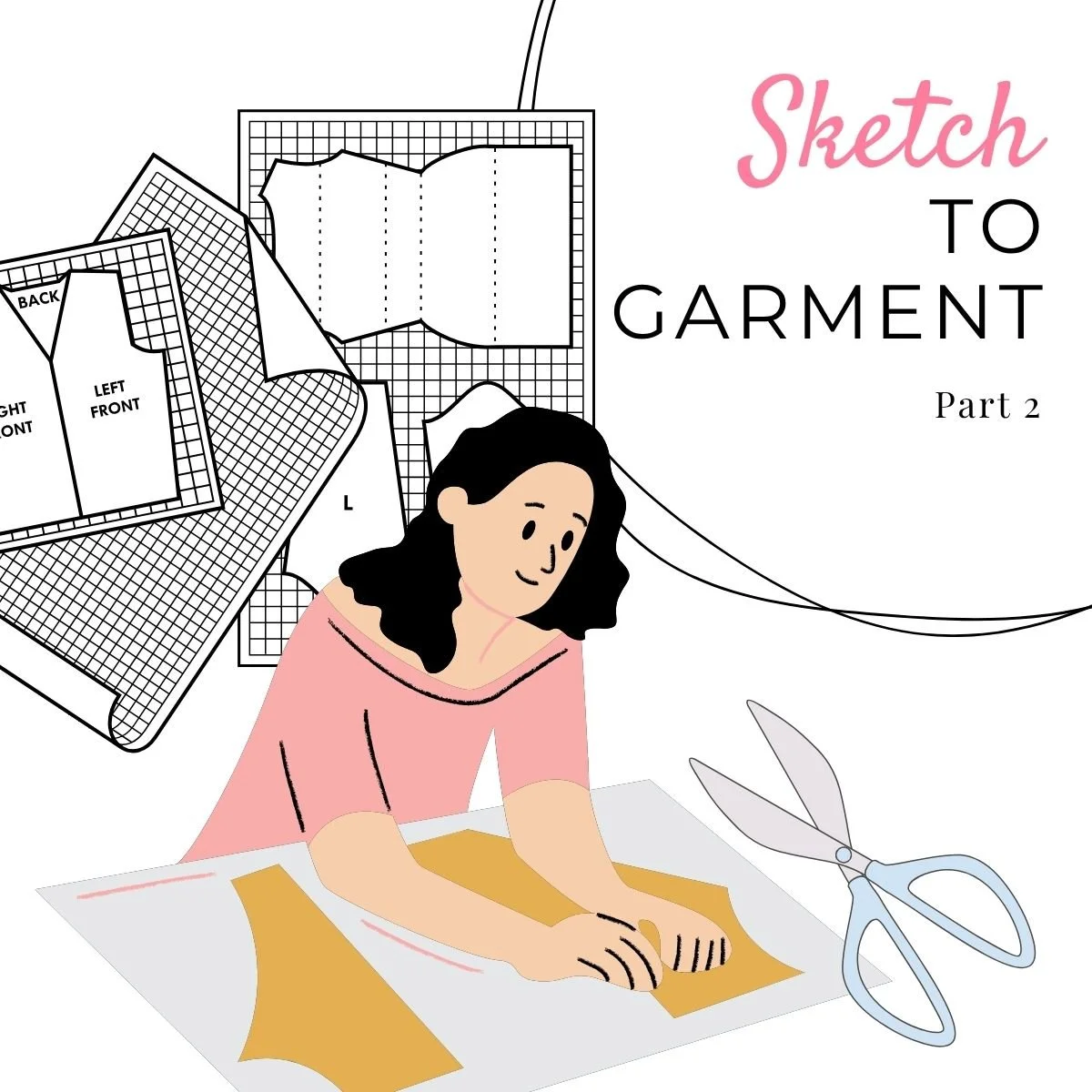
The second part of the process is the pattern making process. Pattern making refers to the process of creating a template from which your fabric will cut from. Patterns can be drafted on paper, draped on a dress form or adapted from an existing pattern. For the beginner we recommend the later, starting from an existing pattern. There are millions of existing patterns in the world. One does not have to start from scratch each time. You can modify a pattern easily if you choose the right one at the beginning. Tips for choosing your pattern:
Look for a pattern that is similar to your design - is it a denim jacket or a pair of jeans or a skirt? If so, a basic version exists already.
I recommend starting your search with the Big 5 pattern companies - Vogue, Butterick, McCall’s, Kwik Sew or Burda. These patterns have already been graded and you can choose the size that fits the measurements you are looking for. Remember, you are going to adapt it to your design so you aren’t technically copying it. It is important to change it at least 30% to stay within copyright parameters.
Choose a pattern that is appropriate for the fabric you’ve chosen - there is usually a recommended fabric section on the back of the pattern. If it's made for knits, but you are using woven fabric, that is not the right pattern for your project.
Get help from an experienced stitcher who can help you adapt your pattern style lines.
Patterns are like puzzles. Each piece needs to fit together. If you split a pattern piece to create a style line, you will need to add seam allowance.
Part 3 - Sewing your Garment
This is the final part of the process. You’ve decided on a simple design with a fabric you are familiar with sewing. You’ve cut your pieces. Now it’s time to sew. Here are some tips for stitching your garment together:
Before you start sewing, make a plan for your garment construction. Garments are usually constructed from the top down, so shoulder seams come first, while collars, cuffs, hems and finishing come at the end of your project.
Practice stitching on your fabric before hand to make sure you are using the right needle, thread and thread tension on your machine for the fabric you are using.
Review your seam allowance for each of the seams before you start sewing and always refer back to your plan of instructions.
Get help from an experienced stitcher if you get stuck. We have weekly classes where we can guide you through your project.
Need more help from a professional, we’ve got you covered. We’ve developed a 3-part series to help you with all these steps. It’s called Developing your Design from Sketch to Garment. Each section of the series is 5 weeks long and our next series of classes starts in January on Wednesdays (part 1) and Thursdays (part 2 and 3) . You can find our more & register by visiting our Fashion Studies Page.
Until next time, Happy Sewing!
xo
Jennifer