
5 Ways to a Better, More Sustainable Wardrobe, Starting with Fit
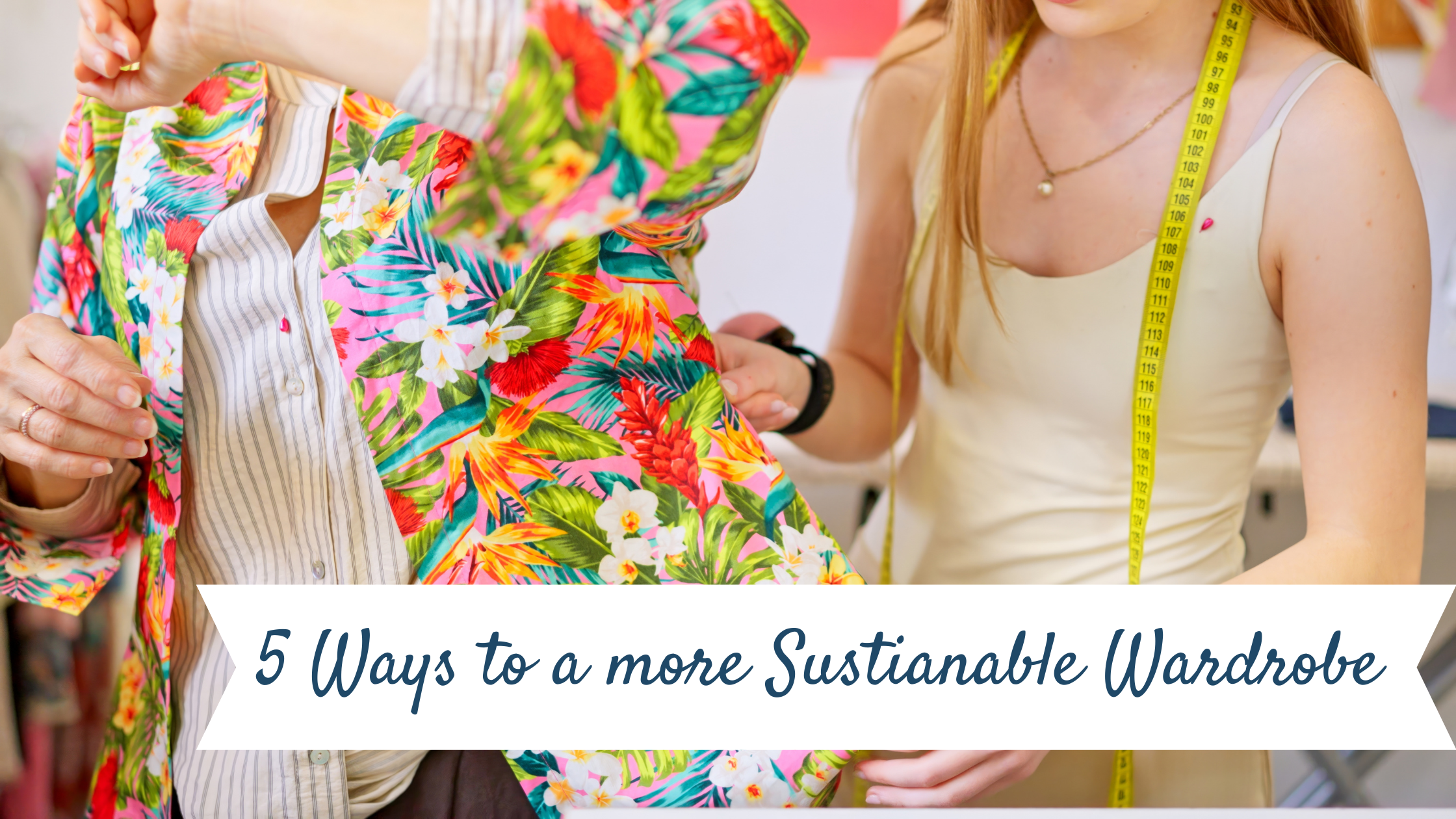
When we think about building a more sustainable wardrobe, we often focus on what to buy—or what not to buy. We look for natural fibers, ethical brands, or secondhand treasures. While those choices certainly matter, there's one factor that has an even bigger impact on whether a garment stays in your closet or ends up in the donation pile:
Fit.
The clothes we love are the ones we wear. And the clothes we wear are almost always the ones that fit us well.
Learning a few basic alteration skills can dramatically extend the life of your wardrobe, reduce textile waste, and help you feel more confident in the clothes you already own. Here are five ways better fit leads to a more sustainable wardrobe.
1. Hem It Instead of Replacing It
Have you ever bought a pair of pants that were just a little too long?
Too often, those pants sit unworn in a closet—or we buy a different pair instead. But shortening a hem is one of the simplest alterations you can learn, and it can completely change how a garment looks and feels.
Whether it's jeans, trousers, skirts, or dresses, the right hem length creates better proportions and makes clothing look intentionally tailored rather than "almost right."
2. Make Clothes Fit You
Ready-to-wear clothing is designed to fit as many people as possible—not you specifically.
Bodies come in countless shapes and proportions, so it's no surprise that a shirt fits in the shoulders but not the waist, or a dress fits the hips but gaps at the back.
Knowing how to adjust darts, seams, pleats, or gathers allows you to customize garments to your own body. A simple alteration can turn something you rarely wear into one of your favorite pieces.
3. Buy Secondhand with Confidence
One of the biggest barriers to shopping secondhand is fit.
When you know how to hem pants or take in a loose garment, your options expand dramatically. Instead of searching for the "perfect" fit off the rack, you can look for quality fabric, good construction, and timeless style—then tailor the garment to suit you.
Learning alteration skills makes thrift stores and vintage shops feel full of possibilities rather than limitations.
4. Keep Clothes in Your Closet Longer
Every garment has a story. Maybe it's a favorite pair of jeans, a dress from a special occasion, or a shirt made from beautiful fabric that no longer fits quite the way it once did.
Small changes can give those pieces new life.
Instead of replacing clothing every time your style changes or your body changes, alterations allow your wardrobe to evolve with you. Extending the life of even a few garments has a meaningful impact on reducing waste and making the most of the resources already invested in creating them.
5. Learn Skills That Last a Lifetime
Unlike trends, sewing skills never go out of style.
Once you know how to create a professional hem or reshape a garment, you'll use those skills again and again. Every future purchase becomes more flexible because you know you have the ability to improve the fit yourself.
Instead of asking, "Does this fit perfectly?" you'll begin asking, "Can I make this perfect?"
That shift in mindset changes how we shop, how we sew, and how we value the clothing we own.
Learn to Alter with Confidence
This August, Julie Ann Brown will be teaching two hands-on classes designed to give students practical skills they can use immediately.
Hemming 101 introduces the fundamentals of creating professional-looking hems for tops, pants, and skirts. Students learn industry-standard hem depths, how to determine the correct finished length, how to mark and cut accurately, and the differences between hemming knit and woven fabrics using both hand and machine sewing techniques.
For those ready to go further, Alterations 101: Making Clothes Smaller explores techniques for improving the fit of garments that are too loose. Students learn how darts, pleats, gathers, and seams can reshape clothing while receiving personalized guidance on fitting their own garments before beginning alterations.
Whether you're hoping to rescue a favorite piece from the back of your closet, shop secondhand with greater confidence, or simply create a wardrobe that works better for your body, learning to alter your clothes is one of the most sustainable investments you can make.
Because the most sustainable garment isn't necessarily the one made from the most eco-friendly fabric—it's the one you love enough to wear for years.
Until next Time, happy fashion!
xo
Jennifer