
Pattern Making, Slopers & Fit: What Do You Really Want to Learn?
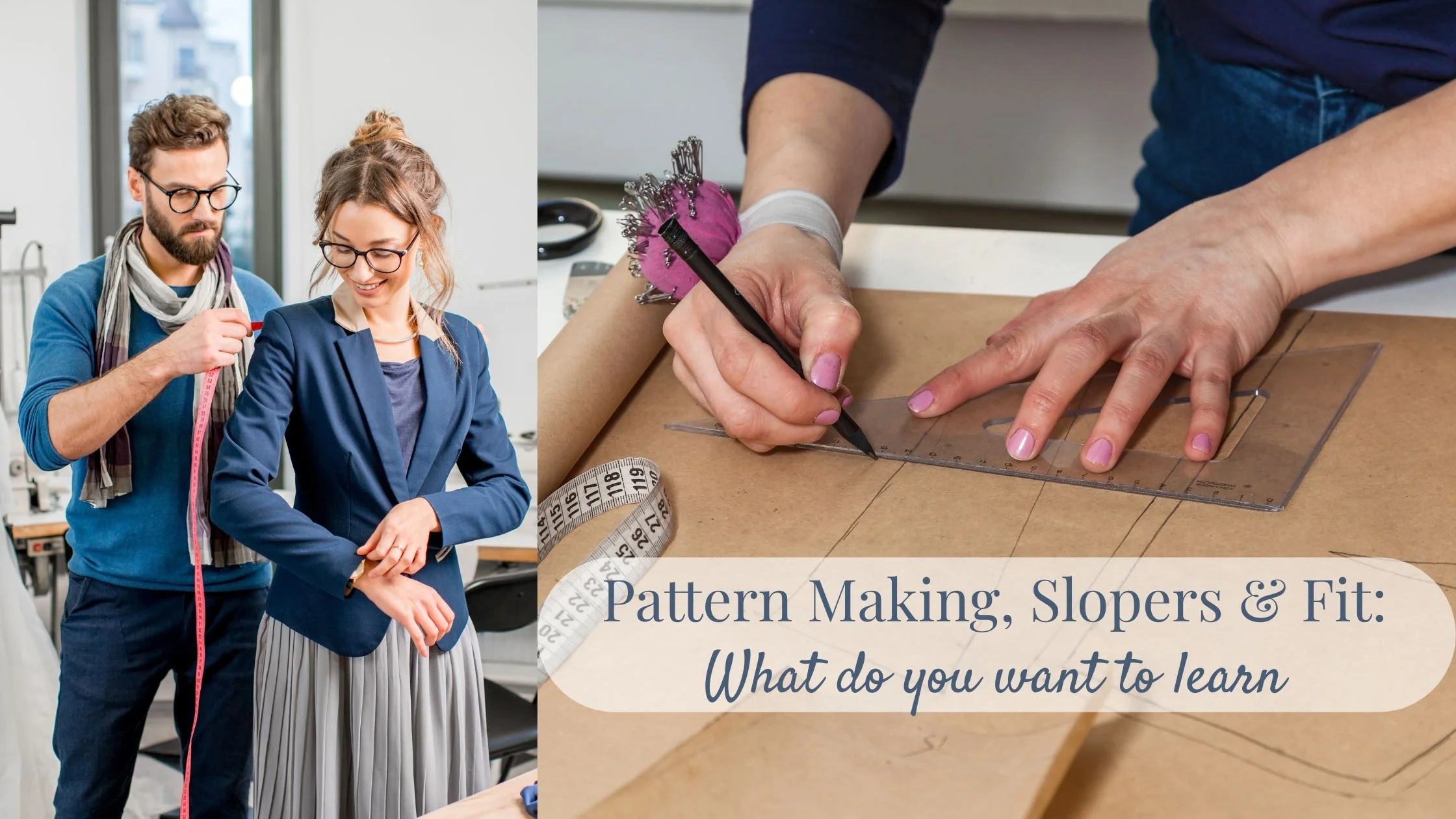
When we ask our students what they’d like to learn next, one request comes up again and again: PATTERN MAKING! Close behind is the desire to create a personal sloper or block—a foundational pattern drafted to fit one's own body.
We've offered pattern-making classes in the past, but we've found that learning to draft patterns from scratch is a bigger undertaking than many students anticipate. After thinking about this and listening to our students, I suspect that what many of us really want isn't necessarily to become pattern makers. We want to understand how patterns work, how to make adjustments, and ultimately, how to sew clothes that fit us well.
Let me explain why there's a difference.
Pattern Making Is a Process
I studied Fashion Design, where I spent two years learning pattern making. I learned to drape fabric on a dress form to develop basic patterns, manipulate those patterns to create different silhouettes, and draft patterns for specific garments. I also learned to transfer draped pieces onto paper and develop them into workable patterns.
But my education didn't end in the classroom. At Gap, I attended fittings almost daily, working with technical designers and vendors to understand how patterns translated into finished garments. Later, through designing and fitting bridal gowns, I honed my fitting observations into pattern changes.
Understanding how a garment fits, identifying why it doesn't fit, and knowing which pattern changes will correct the problem are skills that develop over time. Pattern making is not simply a matter of drawing lines on paper. It's a process of observation, experimentation, and problem-solving.
And here's something you might find surprising: throughout much of my career, I didn't actually use a personal sloper or block. The first ones I created in fashion school were eventually discarded because they weren't particularly useful to me!
What's the Difference Between a Sloper and a Block?
These terms are often used interchangeably, but they serve slightly different purposes.
A sloper is a basic pattern developed to fit a particular body or dress form, usually with minimal design details or ease. It can be drafted using measurements and flat-pattern techniques or developed through draping.
A block is a foundational working pattern used to develop other patterns. It may incorporate design and construction details needed for a particular garment category. For example, a bodice block can serve as the starting point for jackets and blazers, while a trouser block can be adapted to create different styles of pants.
Both are valuable tools for pattern makers. However, having a personal sloper doesn't automatically mean you'll know how to adjust a commercial pattern to fit you. A pattern drafted from your sloper may still need to be balanced, tested, and refined—and a commercial pattern has its own proportions, shaping, and design intentions.
That's where understanding fit becomes especially important.
Perhaps What We Really Want to Learn Is Fit
Over the years, I've spoken with many students who want to create their own slopers. As we talk about their goals, I often wonder if what they're really looking for is garment fitting: the ability to recognize what's happening when a garment doesn't fit, understand why, and make the necessary adjustments.
A pattern can be the right size and still not fit well. Shoulders may be too wide, a waistline may sit too high, or fabric may pull or bunch in unexpected places. Learning to recognize these clues—and understanding how they relate to the pattern—is an essential part of sewing clothes that fit.
And when our clothes fit well, we feel more comfortable and confident wearing them.
A Different Approach to Learning Pattern Making
Rather than jumping into a full pattern-making program, we're exploring ways to break these concepts into smaller, more approachable classes. This spring, we're considering focused workshops in techniques such as dart manipulation, inspired by Pattern Magic, and pattern grading.
These shorter classes will give students an opportunity to explore specific techniques, understand how patterns can be transformed, and build their knowledge one skill at a time. We're still developing the details, but we're excited about creating more opportunities to explore the fascinating relationship between patterns, fabric, and fit.
In the meantime, we'd love to hear from you. Are you most interested in learning to manipulate patterns, grade between sizes, adjust commercial patterns to fit your body, or draft patterns from scratch?
Your answers will help us shape future classes at The Sewing Room! Leave a comment to help us out!
Until Next Time, Happy Sewing!
xo
Jennifer